
How to Choose an Acrylic Dust Cover? Differences Between Guards for Figurines, Models and Equipment
Many people run into pitfalls when buying acrylic dust covers, assuming all clear acrylic covers work the same. In fact, display covers for figurines, storage covers for models, and protective guards for industrial equipment differ greatly in sheet material, thickness, craftsmanship and structure. Picking the wrong one will not only ruin the visual effect and fail to provide proper protection, but may even create safety hazards.
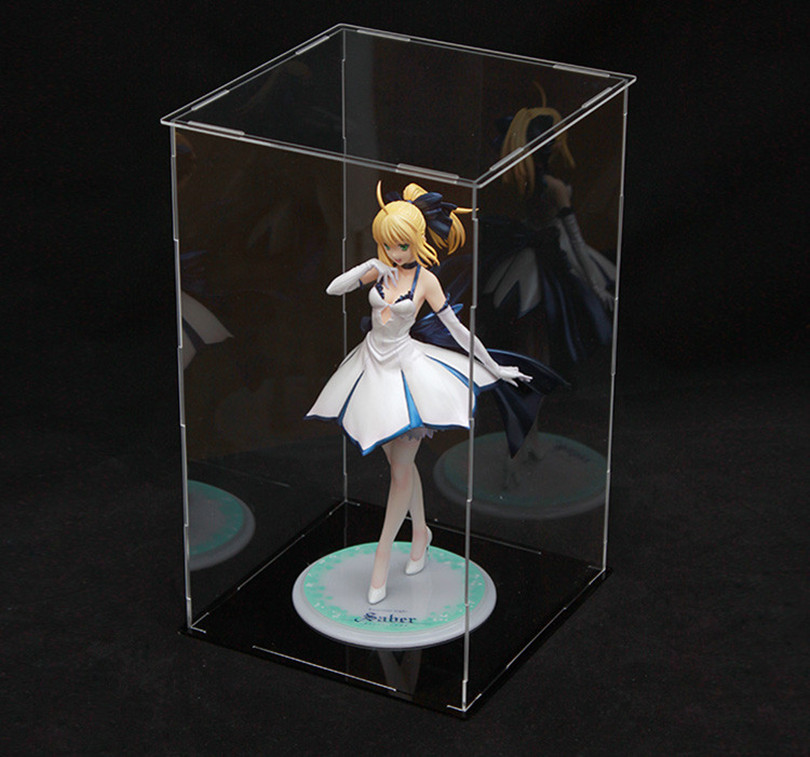
The top priorities for figurine dust covers are high-definition display and paint protection, with clarity and aesthetics as key considerations. Virgin cast acrylic sheets are recommended, featuring high light transmittance, excellent color reproduction and strong resistance to fogging and yellowing. A thickness of 2–3 mm works for regular sizes. Edges must be diamond-polished for a smooth, burr-free finish. Magnetic flip or snap-together styles are convenient for taking figurines in and out. Anti-UV sheets are an optional upgrade for sunlit spots to slow paint fading. These covers require good sealing for dust and moisture control. Many can be fitted with light strips and partition boards, ideal for blind boxes, anime figurines and collectible ornaments.
Dust covers for large building block and Gundam models focus on anti-deformation and stable load-bearing. Larger models span wider areas, and thin sheets tend to warp and bulge. A thickness of 3–5 mm together with a reinforced base is recommended. One-piece glued covers are popular for superior sealing against dust. Compared with figurine covers, model covers demand higher dimensional accuracy, with enough clearance to prevent protruding parts such as antennae from scratching the acrylic surface. For humid southern climates, minor ventilation gaps can be reserved to reduce condensation and protect delicate assembled components.
Industrial acrylic safety guards follow entirely different standards, prioritizing operational safety and suitability for working conditions. More than just dustproof, they block debris and splashes while allowing clear observation of running equipment. Sheet thickness generally ranges from 5–10 mm; PC polycarbonate sheets are used instead where heavy impact may occur. Custom cutouts, slots and cable routing openings are available, along with hinges and latches for easy maintenance access. All corners are chamfered to eliminate sharp edges. Anti-static or heat-resistant acrylic can be selected for hot or static-sensitive environments to meet factory safety standards, widely applied to instruments, automated machinery and test fixtures.
General buying tips: Choose virgin acrylic sheets. Recycled sheets have poor transparency and turn yellow and brittle easily. Check gluing quality — premium joints show no whitening or bubbles. Measure the length, width and height of your item or equipment in advance and order based on inner dimensions. Prioritize clarity and appearance for home collections, and safety and functional compatibility for industrial use. Clarify your needs to get the right acrylic dust cover.
 No agent has been added~